Europe’s digital and green transition increasingly depends on building a shared energy language: common, machine-readable frameworks that allow diverse technologies, stakeholders and countries to seamlessly exchange and interpret data. PARMENIDES and CELINE advance this vision by developing standardized ontologies like PECO and demonstrating how energy dataspaces can improve interoperability, support new services, and create transparent, sustainable value for all actors. Together, the projects help reduce fragmentation and lay the groundwork for a more open, decentralized and future-proof European Energy Data Space.
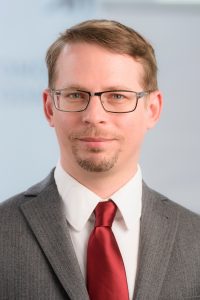 Edmund Widl is a Senior Scientist at the Austrian Institute of Technology (AIT), where he currently works in the research field Power System Digitalization on topics related to cyber-physical energy systems (CPES). His research includes digital twins, online services & platforms, and modeling and simulation. A focus is the analysis and design of multi-domain energy systems, especially hybrid thermal-electrical distribution grids. He is also engaged in the CELINE Project and is an expert in the subject of establishing a common European Energy Data Space.
Shared Energy Language: Key to Europe’s Green Digital Future
One of the most important enablers for the energy transition is the digitalization of the energy system. Ontologies are crucial for this digital transformation because they provide a shared, machine-readable framework for representing complex concepts like energy systems or power grid operation. “In this sense, ontologies are ‘shared energy languages’ that enable interoperability between diverse technologies, data sources, and stakeholders, allowing machines to integrate and analyse information consistently.” – highlights Widl. Combined with the advances in artificial intelligence in the last years, this will improve the efficiency of many processes that used to involve painstaking and error-prone manual work from engineers.
For instance, in an energy community with solar panels, batteries, and smart appliances, PECO can enable machines to interpret concepts like energy flexibility, storage capacity, and consumption profiles uniformly. This allows automated coordination between households and the power grid, optimizing when to store, consume, or share energy. At the same time, they can enable interoperability across different vendors and platforms.
How EU Projects Can Advance a Shared Energy Data Space
Widl emphasizes that the vision of a common European energy dataspace is so appealing because it has the potential to overcome many of the challenges that we are facing in the digital transformation of the energy system. Dataspaces are expected to become a ubiquitous digital resource, similar to clouds today but better suited to address challenges related to data access, data interoperability and data sovereignty.
Edmund Widl underlines here that we still need to prove that dataspaces can deliver on this promise. European projects provide the opportunity to demonstrate this in practice. “I believe we can show that dataspaces can help with the technical challenges and at the same time unlock new sustainable business models and provide transparency to end users.” – concludes the AIT Senior Scientist.
Benefiting Actors in Standardized Data Model like PARMENIDES’
Edmund Widl explains that the EU is thriving to steer the digital transformation in a direction that is fair and beneficial for all involved. One goal is to establish a data economy that enables new business models and at the same time respects the privacy of citizens. Ontologies and dataspaces are key enablers for such a data economy.
The goal is to have a win-win situation for all involved stakeholders, creating added value for communities, DSOs, and tech providers. From this perspective, end users will probably benefit the most, because they are also the ones who have the most to lose in an unregulated data economy.
Aligning Diverse National Models: Challenges & PECO’s Potential
A big challenge is the heterogeneity of legislation and regulatory frameworks across Europe, which translates into a high level of complexity and lack of interoperability on the technical level. This is partly unavoidable due to regional differences, but to some extend also an artifact of a lack of coordination and cooperation. “Nevertheless, efforts are ongoing to improve the situation, and I am confident that this will be successful.” – underlines Widl. Efforts like PECO help streamlining this process, for instance by highlighting what is already working well and showcasing best practices.
Supporting Sustainable Innovation in Europe’s Digital Energy Transition: PARMENIDES & CELINE’s role
As he previously stated, Edmund Widl believes that interoperability will be crucial for success. Digital solutions for the energy sector cannot be developed in isolation; rather, they must be integrated into the larger picture of digitalization. Efforts such as GAIA-X and the Digital Europe Programme are critical in providing a more comprehensive background and broader context.
Learn more about the PARMENIDES Project by subscribing to our newsletter.